The Work Doesn’t End with Atticus Finch


On July 11, 1960, Harper Lee published To Kill a Mockingbird. The novel became an instant classic, won the Pulitzer Prize, and has sold more than 40 million copies. It is still widely taught in schools… and regularly challenged or banned.


Set in the Jim Crow South, the book follows a white child’s moral awakening as her father defends a Black man falsely accused of rape. For many white readers, it was the first time they were asked to confront the reality of racism. But while the story had a cultural impact, it also had a serious flaw: it told the story of racial injustice through a white lens. Which makes sense, because it’s based on the lived experience of the author. 


But the Black characters, Tom Robinson, Calpurnia, only exist in the background. They are essential to the plot but are not allowed to speak for themselves. Tom is (spoiler!) wrongly convicted and killed, but his death serves more as a lesson for the white characters than a moment of collective grief or outrage for the Black community. Calpurnia remains silent. Her inner life is never explored.


The novel centers whiteness.


In 2015, one year before her death, Harper Lee’s earlier draft, Go Set a Watchman, was released. It caused immediate controversy. In this version, the little girl from To Kill a Mockingbird is an adult who returns home and discovers that her father, Atticus, holds racist views and is aligned with segregationists. Many readers were shocked. Some rejected the book entirely.


But Go Set a Watchman told a more honest story. One where heroes fall, family loyalty is tested, and confronting racism means confronting those we once admired. The title, drawn from Isaiah 21:6, calls on us to stay awake, to speak up, and to name what we see, even when it means questioning our own communities.


That is not an easy thing to do. And neither is writing it.


Harper Lee did not do it alone. Her editor, Tay Hohoff, helped shape To Kill a Mockingbird into what it became. Together, over two years, they revised, restructured, and challenged their own assumptions. That kind of editorial labor is often invisible, but essential. 

Women did that work. Women are the watchmen.


But reading these books is not enough.


Many white readers treat To Kill a Mockingbird as a moral badge. They read it, feel sad, maybe assign it to their children, and move on. 

But that is not the work. That is the beginning.


If we truly want to engage with the legacy of racial injustice, we need to hear from the people who lived it, not just from those who observed it.


Two works in particular offer exactly what Mockingbird does not:


A Lesson Before Dying by Ernest J. Gaines centers a young Black man, Jefferson, who is wrongly convicted and sentenced to death. The story follows his journey toward dignity and humanity, guided by a Black teacher who is also navigating his own disillusionment. It is not about a white savior. It is about survival, resistance, and the emotional toll of injustice on Black lives.


Calpurnia by Audrey Dwyer is a modern Canadian play that directly confronts To Kill a Mockingbird’s silences. It imagines what the story would look like through the eyes of Calpurnia, the Finch family’s Black housekeeper. The play challenges the idea of who gets to tell the story, who is centered, and what happens when people of color claim narrative control.


These are the voices that were missing from Mockingbird. These are the stories that go beyond sympathy and invite us into truth.


If you are ready to go further, you are invited to read books that teach what Mockingbird only hints at:


To Kill a Mockingbird started a conversation. It is our job to continue it, with honesty, with accountability, and with a willingness to listen to those whose voices were left out.


Reading a novel about racism is not enough.

Letting it change what you tolerate, what you question, and what you teach your children, that’s where the work begins.

Apathy Is How Authoritarianism Wins. Here’s How to Snap Out of It.


I was watching a cartoon with the kids. There was a brawl and a good guy sent a bad guy sprawling. Instead of healing or helping, another good guy just stepped aside. There was an awkward moment between the two. The one who dodged shrugged and said, “I’m a pacifist.” And the righteous fight for justice carried on, while the dodger became just a witness.


One of my kids looked over at me and quoted something they’ve heard me say a hundred times:

“Being neutral only ever helps the oppressor, never the oppressed.”

I got choked up a little. Because it’s true. And they know it now too.


But in this country right now, too many people are still playing the dodger.

They see the injustice.

They feel the tension.

But they step aside, shrug their shoulders, and say, “It’s not my fight.”


They think staying neutral keeps them safe.

But it doesn’t.

It just buys time… but for the people doing the harm.


You Might Be Numb and Not Know It.


Apathy isn’t always loud. It doesn’t always look like denial. Sometimes it sounds like:


  • “I stopped watching the news — it’s just too much.”
  • “Both parties are corrupt.”
  • “Nothing I do will change anything.”
  • “It hasn’t affected me personally.”
  • “I don’t want to get political.”
  • “If they just followed the law, they wouldn’t have been hurt.”


If any of this feels familiar, you’re not alone.

But you’re also not immune.

Apathy doesn’t protect you. It just delays your awakening until it’s too late.


Why So Many Americans Are Asleep While It All Falls Apart


We’ve been lied to.

Corporate media sells confusion. Social media amplifies chaos. Facts feel slippery. People give up trying.


We’re exhausted.

We’re overworked, underpaid, and stretched to the edge. Who has time to save democracy when you’re just trying to stay afloat?


We’ve been trained to obey.

From childhood we’re told to follow rules, respect authority, avoid “making things worse.”


We haven’t been hit yet.

The most comfortable still believe they’re safe. But ask an immigrant, a trans teen, a public school teacher, a journalist, or a pregnant woman if that’s true.


We’re scared.

And honestly, we should be.


Protesters are being arrested. Rights are disappearing. People have good reasons to be afraid.


But silence won’t save us either.


In fact, if you’re afraid that speaking out or protesting could become dangerous, that’s not a reason to stay quiet — it’s a warning sign. It means now is exactly the time to speak up. To show up. To stand beside others while we still can.


Because if we wait too long, speaking out will get us silenced.

Protesting will get us killed.


Fear is valid. But it’s also a compass. And right now, it’s pointing straight at the fire.


We don’t have the luxury of pacifism. Not when people are being deported from church parking lots. Not when journalists are being jailed. Not when courts are being stacked to erase our rights from the inside out.


If you feel the fear creeping in, let it wake you up, not shut you down.


So What Do We Do Now?


You don’t have to do everything.

But you do have to do something.


Wake Yourself Up


Admit it.

Say out loud: “I haven’t been paying attention.” Or “I’ve been too scared to speak up.” Honesty is the first crack in apathy’s armor.


Reconnect with reality.

Choose one grounded source of news. Read one article a day. Share it with someone. Stay present. 

Don't look away. 


Find your lane.

You don’t have to march. But you can write, teach, drive, fundraise, volunteer, organize, host, cook, or vote. Do your thing. Just do something.


Talk to people.

Push past the awkward. Challenge propaganda. Share real stories. Use your voice, even when it shakes.


Join others.

Movements make courage contagious. Find people doing the work and link arms.


Help Wake Others Up


Lead with compassion.

Shaming people rarely works. Ask questions. Tell stories. Make it personal. Admit, “I used to think that too.”


Show them a way in.

Invite them to a teach-in, a vigil, a fundraiser, a volunteer shift. Don’t just talk about resistance, let them touch it.


Build What Authoritarianism Fears


We don’t win with outrage alone. We win with community. We win with infrastructure:


  • Legal defense teams for protestors, immigrants, and marginalized groups
  • Mutual aid networks to care for each other when the state won’t
  • Local organizing from school boards to city halls
  • Mass education, teach-ins, podcasts, infographics, political storytelling
  • Targeted economic disruption, strikes, boycotts, sickouts
  • Art and culture that tells the truth and keeps people tethered to hope


This Is It. This Is the Moment.


If you’re waiting for the fight to start, it already has.

If you’re waiting for someone else to lead, they already are.

If you’re waiting until it affects you personally, it already does.

You just might not feel it yet.


History will remember what we did in this moment.

It won’t be kind to those who stepped aside.


As my kid reminded me, neutrality doesn’t help the wounded.

It just clears the path for the knife.


And if you’re watching the world burn while calling yourself a pacifist…

You’re not a healer.

You’re a bystander.


It’s time to pick a side.


Take the First Step Right Now


If you’re ready to do something, but don’t know where to start — I’ve got you.


Start here:


📚 The Resistance Reading List

Want to understand what we’re up against and how to fight it? This curated reading list will get you grounded, equipped, and inspired.

👉 https://tr.ee/1dfJYY


📞 Call Your Reps with 5 Calls

Don’t underestimate the power of your voice. The 5 Calls tool makes it fast, easy, and effective to pressure Congress on key issues.

👉 https://5calls.org


One call. One book. One conversation. One step toward showing up. That’s how the resistance begins.


Do what you can, with what you have, where you are.

Then do a little more.


Because we don’t need millions to move all at once.

We just need enough of us to stop pretending this isn’t happening, and start fighting like hell to stop it.


Featured Post

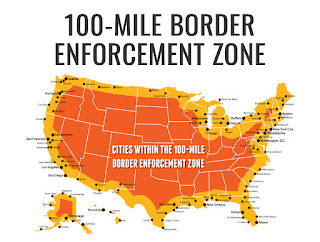
Portland Is Now a Constitution-Free Zone

Welcome to the Constitution-free zone. If you live in Portland, Oregon, you are now officially inside the 100-mile “border enforcement zone...